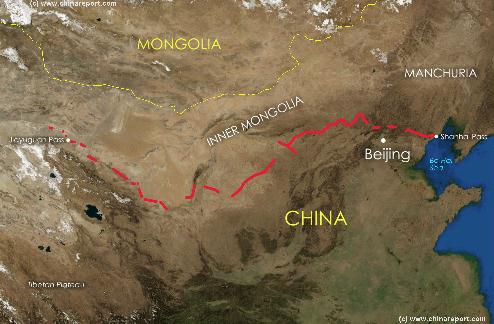
Intersection stand the majestic Large Wooden Halls of Upper- and Lower-HuaYan Monastries who togeher form the most interesting and historci Temple complex in the city. ith a history dating back to the Tuoba ei Empire in what today is northern China, these are no ordinary Chinese Temples but unique historical relics from a now nearly forgotten ear in which half of China was ruled by Foreigners of nomadic descent. As if to illustrate the pain that the memory of this humiliation still inflicts today, the Tuoba
- Full Photos & Report on the 9 Dragon Screen of Datong -
This page was last updated: June 5, 2017
Datong Nine Dragon Screen
Directions to the Datong Nine Dragon Screen -
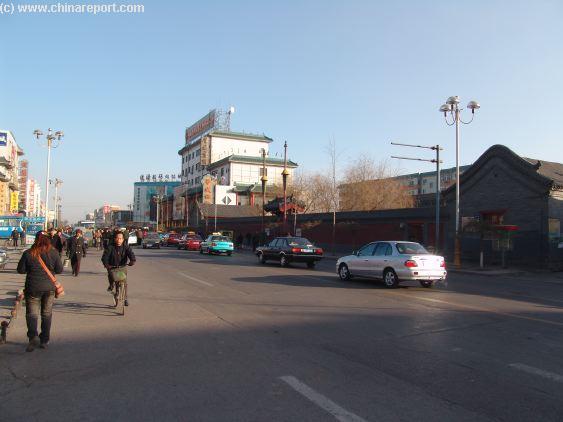
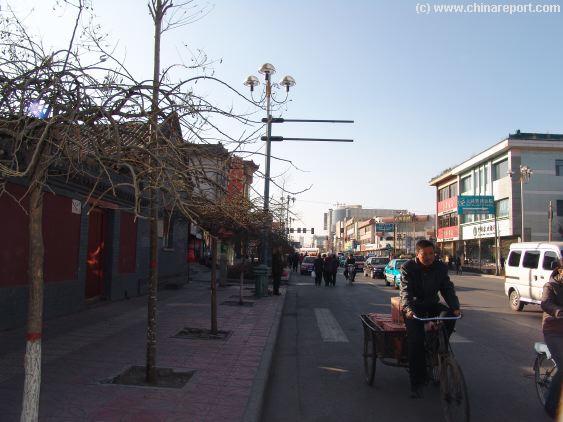
The Nine Dragon Screen of Datong is easy to find. Located near the very center of the (former) Old Walled City Section on, it stands just a short walk East along Dong Dajie' from the Old Cities' current central intersection. You Can't miss it !
History of the Datong Nine Dragon Screen -
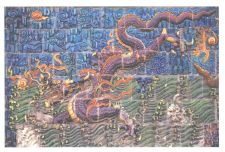
The Datong Nine Dragon Ceramic Screen is the only remaining example of such a screen outside the Capital of China, Beijing. The other 2 such screens are the one found on the north shores of North Lake (Beihai) in Beihai Park in the DongCheng District of Beijing, while the other is a part of the Palace of Peaceful Old Age at the (Imperial) Palace Museum of Beijing. The screen was constructed in 1392 AD during the 25 year of the reign of First Emperor Zhu YuanZhang of the Ming
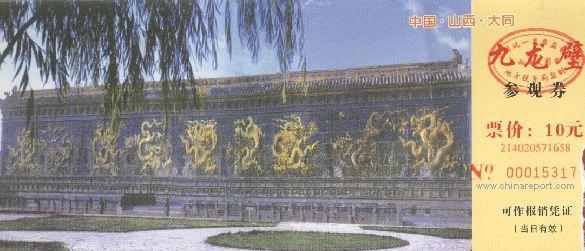
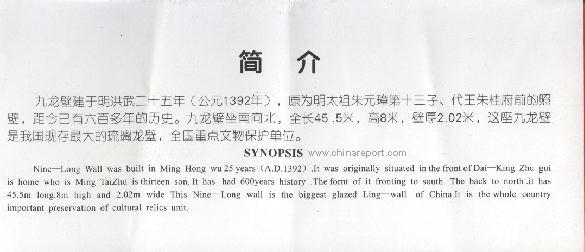
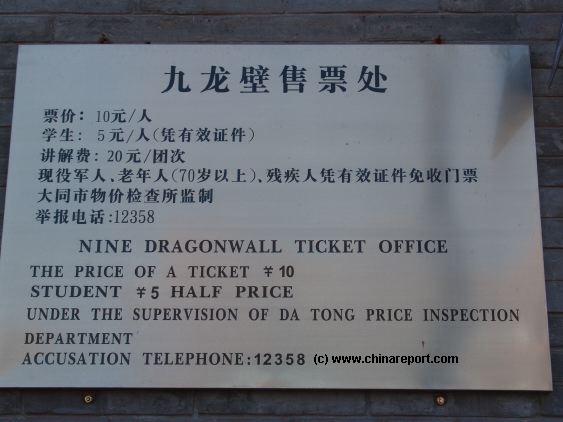
The Official Ticket to see the Nine Dragon Screen of Datung, the only one in China except for the 2 in Beijing (Beihai Park, Imperial Palace).
Designating High Imperial Rank and Splendor, the 9 dragon screen is a remainder of the Palace of Prince Zhu Gui, who was Crown-Prince and 13Th Son of of Ming Emperor Zhu YuanZhang. Having been honored with the crucially important task of the Command of military forces in this strategic sector along the border with traditional Mongolian tribal grazing lands, he thus resided in Datong and had a
- Mouse over Image -
- Mouse over Image -
Eventually, its luck ran out after the demise of the Ming Dynasty. During
a period of weakened defense the City was sacked in the year 1652 AD, destroying the Royal Palace. In fact, the entire city was burned and
nearly raised to the ground. Although it certainly was not the end of the town of atong as a military fortress of considerale strategicimportance, no new Palace was built during the succeeding Qing Dynasty (1644 AD - 1911 AD), a Dynasty of nomadic Manchurian descent. In due time, the Kangxi and Qianlong Emperors would unite Manchuria with Mongolia and China, thus finally bringing north and south of the wall together.
The Datong Screen of Today -
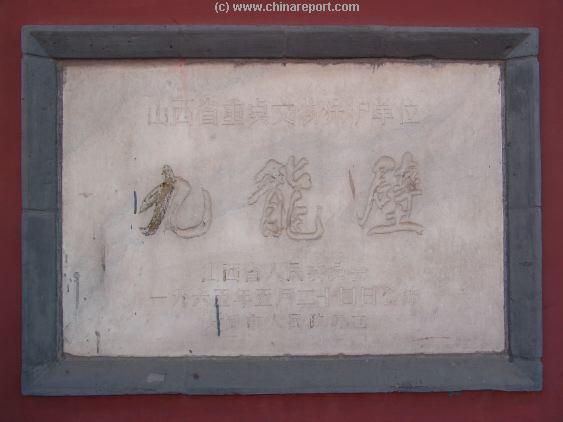
Today only the Dragon Screen, some steles and excavated fragments from the Palace remain. The fragments are on display at local monasteries and musea, but the Dragon Screen and Steles can be viewed and visited. The Palace which the Dragon
with greater powers but also heavier responsibilities.
Zhu Gui was one of the eight Kings thought worthy of handling the Important task of defending the Empire, pursuing the claimants to the legacy of the Mongol Yuan Dynasty Throne and preventing their resurgence on the (Inner) Mongolian Steppes. Not much later on, the task of the Royal commander also included overseeing defenses on the Great Wall. The Dragon Screen, thus was part of an important Royal Palace during the Ming Dynasty and Datong was a vital Frontier City with a considerable garrison.
The main duties of Garrison and King were to guard YanMenGuan Great Wall Pass against frequent and dangerous Mongol Invaders. This function would land the City in the middle of Battles on more than one occassion.
To be exact, in 1449 AD Mongol Troops attacked both Datong and XuanFu (now in Hebei Province). Not much is known about
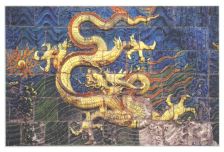
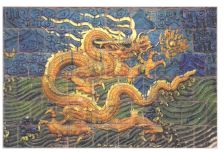
Details of Dragons on the Nine Dragon Screen of Datong, North Shanxi.
find his Throne already usurped upon his return to the Chinese Capital of Beijing in the year 1456 AD. In the end Yingzong was only able to return to the Throne after a lenghty house arrest and final demise of his own brother, the new Emperor.
As a result of al the dram andd intrigue, the Ming Empire was shaken and even more importance was given to the strategic City of Datong and protection from invasion from the North.
AEven after the humiliating capture of the Emperor and the loss of a gargantuan Chinese Army, The Palace of Datong remained in function, gaining in importance. 90 Years later, in 1540 AD, the Mongols attacked again, once more choosing Hebei and North-Shanxi, with Datong in the balance, as their target. On this occassion the Mongols penetrated the outer
Wei are usually dubbed the Liao Dynasty in China, a term which seems to suggest a sinification of the Barbarians by more advanced Chinese Cultural traits.
Just to the West, and south from the intersection is the Ancient City Drum Tower. As a matter of fact, due to the small size of Datong during most of history, most historic city monuments are within walking distance.
Last but not least, conveniently located, the luxury 5 star Yungang International Hotel with its excellent service and comfortable rooms stands only one block from the Main Intersection, making it easy to see the most and explore on foot.
Ghost Gate -
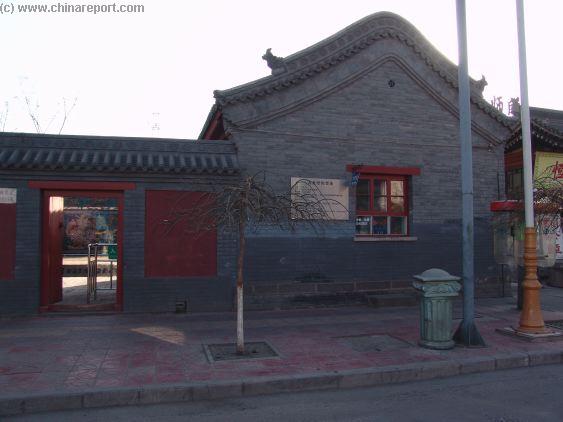
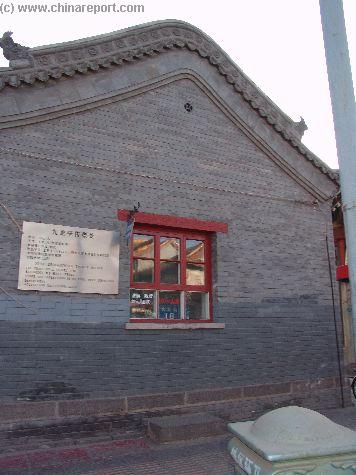
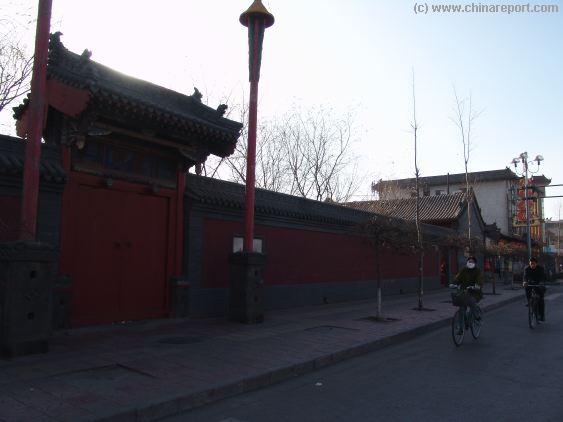
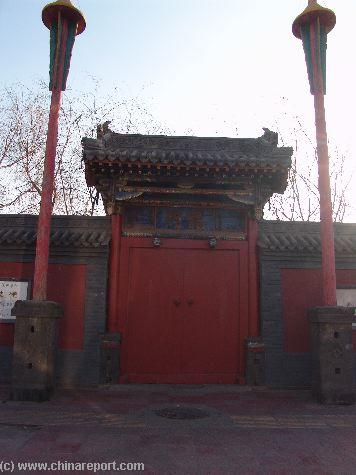
Don't forget to browse around the so-called "Ghost Gate" just west of the minor side-gate that functions as Main Entrance for tourist visitors. Although the ghost gate is not much of a sight, it is part of the overall history of this monument. It functions are related to Feng Shui and are meant to keep ghost and bad
spirits from entering the Nine Dragon Screen Site. The very existence of these doors show how revered the Nine
Dragon Screen remained for a long time, even after the destruction of the Imperial Palace that it was part of. Even today, the Nine Dragon Screen is famous around China. Not only for its record-breaking size and history.
"temporary" Palace there for some period, overseeing the defense of the northern border and the clean-up of remnants of the forces of the fallen Yuan-Dynasty 1271 AD - 1368 D) which were still scattered in the area.
Zhu Yuanzhang had 26 Sons.
By the time that the Ming Dynasty had been declared and its establishment and solidification were well underway some
Sons had died before maturity or in
battle but the remainder were
made Kings of their own fiefdoms, together ruling all area's of the Empire.
Some received lesser post while others found them-selves blessed
the Fate of the city of Datong or any damage done to the Palace, but the Mongols managed to capture and arrest the Ming Emperor (Yingzong) with devastating consequences on the home front of the Court in Beijing. The unfortunate Yingzong Emperor was held hostage for about 6 years, only returning to
Find DrBen and ChinaReport on Facebook with the latest from www.drben.net.